Vivek Narayan Sharma vs Union of India — Demonetisation case
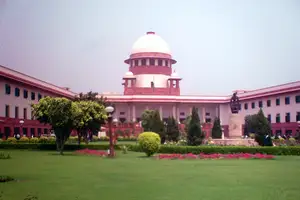
The Supreme Court upheld the 2016 demonetisation of Rs 500 and Rs 1000 currency notes by a 4:1 majority. The court ruled that the decision-making process was not flawed or unlawful, while a dissenting opinion noted that the exercise was unlawful but could not be reversed.
Sanjiv Kumar vs Union of India — Challenge to appointment of Chief Justice of India
A public interest litigation was filed challenging the appointment of Justice DY Chandrachud as the 50th Chief Justice of India. The Delhi High Court dismissed the petition and imposed costs of ₹1 lakh on the petitioner.
The Supreme Court upheld the constitutional validity of the 103rd Constitutional Amendment Act, which introduced a 10% reservation for Economically Weaker Sections in a 3:2 verdict on 7 November 2022. While hearing ongoing challenges to the policy, the Supreme Court observed on 28 July 2026 that the Rs 8 lakh annual income threshold for eligibility appears prima facie reasonable.
S P Gupta vs Union of India and Others — Collegium System for Judicial Appointments
This public interest litigation concerns the delayed finalization of the Memorandum of Procedure for judicial appointments and allegations of executive interference in the Collegium system. On 18 November 2026, the Supreme Court issued a notice to the Centre regarding the delay and granted the petitioner, Lok Prahari, permission to file an amended petition. This follows the recusal of Justice PS Narasimha from the bench on 2 November 2026 due to his previous role in the National Judicial Appointments Commission case.
Petitioner vs Union of India — PIL seeking replacement of 'Central Government' with 'Union Government'
A public interest litigation was filed seeking a directive to replace the term 'Central Government' with 'Union Government' in all official communications, arguing that the current terminology impacts the federal structure of the Constitution. The Delhi High Court dismissed the petition, observing that the use of the term does not violate the fundamental structure of the Constitution.
The Supreme Court is hearing the challenge by the Uddhav Thackeray faction against the Maharashtra Assembly Speaker's decisions regarding MLA disqualifications and the merger of MPs. In the latest hearing on 18 November 2026, the Eknath Shinde faction argued that the decision to form the Maha Vikas Aghadi government constituted an ideological departure from the party. The proceedings currently examine whether legislative dissent amounts to defection and the implications of the Maharashtra Assembly term ending on 28 October 2026.
RIT Foundation and others vs Union of India — Marital Rape Criminalisation
The Supreme Court is hearing a batch of petitions challenging the constitutionality of the marital rape exception, following a split verdict from the Delhi High Court. A bench led by Chief Justice of India Surya Kant has scheduled the final hearings for these petitions to begin on 9 December 2026 or 10 December 2026, as reported on 19 November 2026.
Irshad Mohammad vs State of U.P. and 3 others — Use of loudspeakers for Azaan
The Allahabad High Court dismissed a plea by Irshad Mohammad seeking permission to use loudspeakers for the Azaan at a mosque. On 6 May 2022, the court ruled that the use of loudspeakers for religious purposes is not a fundamental right and must comply with noise pollution regulations.
Aishat Shifa vs State of Karnataka — Hijab ban case
The Supreme Court delivered a split verdict regarding the validity of a ban on wearing hijabs in educational institutions in Karnataka. The matter was referred to a larger bench due to the difference of opinion between the two judges.
Rahul Ramesh Wagh vs State of Maharashtra — OBC reservation in local body elections
Rahul Ramesh Wagh challenged the constitutional validity of the 27 percent OBC reservation in Maharashtra local body elections, citing a lack of empirical data and concerns regarding the 50 percent reservation limit. As reported on 21 July 2026, the Supreme Court of India orally permitted the state to proceed with pending local body elections provided they do not breach the 50 percent ceiling.
Prakash Singh vs Union of India is a landmark public interest litigation mandating comprehensive police reforms across India to ensure the independence and accountability of police forces. As reported on 7 September 2026, the case is before the Supreme Court, where the amicus curiae challenged the Odisha government's procedure for appointing the Director General of Police, alleging it violates the established directives on police appointments.
In its 11 February 2021 judgment, the Supreme Court of India established significant principles regarding reasonable accommodation for persons with disabilities within the Union Public Service Commission civil services examination process. The precedent set by this decision continues to be cited by the Supreme Court in subsequent matters, as reported on 3 February 2025.
Amit Sahni vs Commissioner of Police — Shaheen Bagh Protests
The Supreme Court delivered a verdict regarding petitions challenging the indefinite public protests at Shaheen Bagh, Delhi, which were held against the Citizenship Amendment Act. The court examined the balance between the right to protest and the right of the public to access common areas.
Afzal Ansari and others vs. State of U.P. and others
The Allahabad High Court heard a petition challenging restrictions on the use of loudspeakers for Azaan during the COVID-19 lockdown. The court held that while Azaan is an essential religious practice, the use of loudspeakers is not an integral part of Islam protected under Article 25 of the Constitution.
National Register of Citizens (NRC) verification process
The Supreme Court is overseeing the National Register of Citizens process in Assam, specifically addressing the rights of those excluded and the issuance of identity documents. As reported on 22 July 2026, the Court issued notices to the Union and Assam governments regarding the lack of an appellate mechanism for over 19 lakh excluded individuals. Furthermore, as reported on 10 August 2026, the Court directed these governments to respond to petitions advocating for the issuance of identity cards to individuals included in the NRC.
State of Maharashtra vs Dr. Jaishri Laxmanrao Patil — Maratha Reservation Case
The Supreme Court declared the 2018 Maharashtra State Reservation for Socially and Educationally Backward Classes Act unconstitutional on 5 May 2021, upholding the 50% reservation ceiling. Subsequent challenges concerning current reservation policies are under judicial review at the Bombay High Court, which scheduled the next hearing for 27 November 2026 after refusing a request for day-to-day proceedings as reported on 10 November 2026.
Karnail Singh vs. State of Haryana — Animal Legal Status Case
The Punjab and Haryana High Court declared all animals in Haryana to be legal persons in a judgment issued on 31 May 2019. This landmark status was subsequently limited by the Supreme Court, which dismissed a broader plea to grant the entire animal kingdom status as legal entities as reported on 31 March 2023.
Union of India vs. Jarnail Singh — Reservation in Promotion
The Supreme Court is addressing the implementation of reservations for Scheduled Castes and Scheduled Tribes in government job promotions. Following a judgment delivered on 28 January 2022, the Supreme Court consolidated 154 petitions from various states into a unified hearing procedure as reported on 19 November 2026.
Indian Young Lawyers Association vs State of Kerala — Sabarimala review case
A nine-judge Constitution Bench of the Supreme Court is examining broader constitutional questions arising from a 2018 verdict that permitted women of all ages to enter the Sabarimala temple, including issues regarding religious freedom and the maintainability of Public Interest Litigation. The bench concluded its hearings and reserved its verdict on 14 May 2026, after addressing the essentiality of faith and the locus standi of the original petitioners.
The Supreme Court of India declared the penal provision criminalizing adultery unconstitutional in the Joseph Shine case. As reported on 14 May 2026, the Delhi High Court set aside a man's adultery conviction, confirming the offense is no longer legally recognized.